Tech-led.com


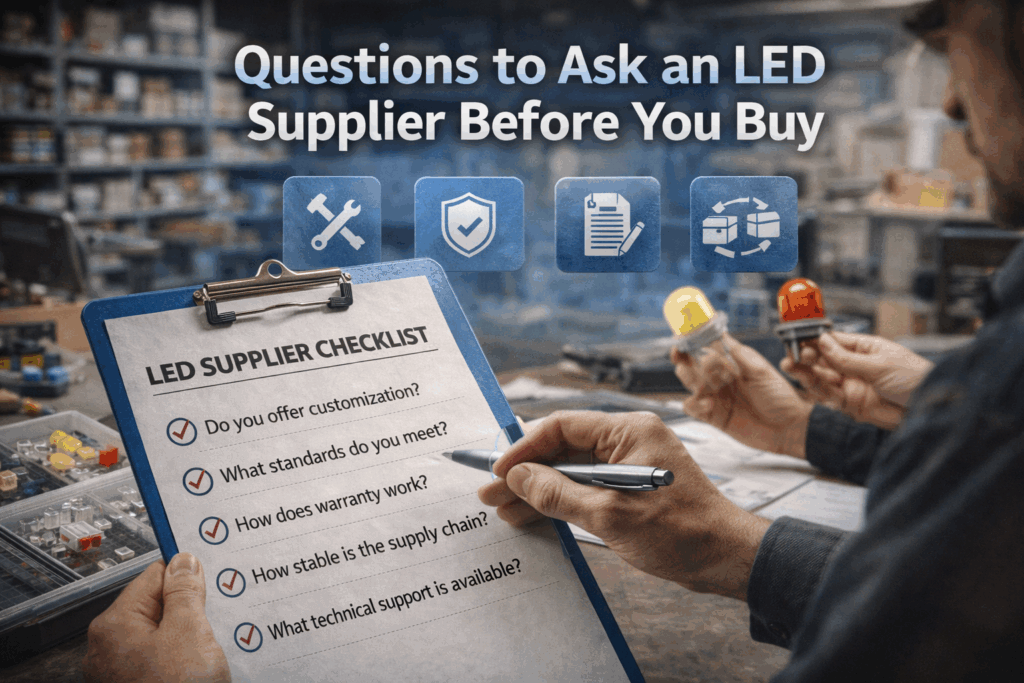
Choosing the right LED supplier is not just about price, lead time, or who answers your email fastest. The best buying decisions come from asking the right questions before a quote becomes a commitment, especially when the lighting application affects performance, maintenance, compliance, and long-term supply continuity. This guide gives buyers a practical framework for supplier evaluation, sourcing questions, and a real-world LED procurement checklist so teams can make an informed decision before they buy.
Whether you are sourcing for industrial lighting, OEM integration, research equipment, retrofit work, or a broader lighting project, a good buying process can reduce risk, clarify technical fit, and prevent expensive surprises later. Instead of taking a one-size-fits-all approach, use these essential questions to evaluate product quality, documentation, support, and long-term reliability.
Why do the right questions matter before you buy LED lighting?
Every buyer wants confidence, but confidence usually comes from detail, not marketing. Before purchasing any lighting product, it helps to understand whether the supplier can explain the application, the environment, and the performance expectations in a way that matches your actual lighting needs. That is the real value behind asking a question to ask early in the process rather than after a problem appears.
In technical procurement, the wrong assumptions can affect energy costs, replacement schedules, output consistency, and even system safety. A reputable partner should be able to help you connect the purchase to the real-world demands of the installation rather than push the same answer for every customer.
What experience does the supplier have with your lighting project?
One of the first key questions to ask is whether the team has handled projects like yours before. A lighting supplier that understands industrial lighting, OEM development, machine vision, horticultural systems, or specialized inspection equipment will usually ask sharper follow-up questions and steer the conversation toward application fit instead of generic product claims.
This is where supplier evaluation becomes practical. Ask what types of projects they support, what industries they know well, and how they handle unusual specific needs. If the answer sounds broad but vague, that is worth noticing. A good supplier should be able to discuss how a fixture, module, or component behaves within a real lighting system, not just recite catalog categories.
What technical specs and performance data can they provide?
Buyers should always ask for the spec and supporting documentation behind any recommendation for LEDs. That includes a spec sheet, electrical details, thermal limits, light output data, and any performance data quoted in the sales process. If the supplier cannot clearly explain what is measured, under what conditions, and what the numbers mean, it becomes harder to compare options fairly.
For LED products, this often means asking about lumen output, watt draw, color characteristics, viewing angle, and how the product is expected to perform throughout its lifetime based on theoretical modelling. If the application is sensitive, you may also want data on led performance, uniformity, or colour rendering. Strong technical documentation is often one of the clearest signs you are dealing with reputable manufacturers and a technically serious channel partner.
How do they handle LED chips, binning, and consistency?
Not every buyer needs to go deep into semiconductor details, but it is still smart to ask your supplier how they manage component consistency in their LEDs. In many applications, led chips, bin selection, and package variation can affect color, intensity, and repeatability. If a product depends on a specific diode behavior, the supplier should be able to discuss bin practices, sourcing stability, and what happens if a component family changes.
This matters even more in systems where small shifts create visible or measurable consequences. For example, colour rendering, cool white targets, and color shifts may all matter depending on the end use. A technically credible led supplier should be able to explain whether the product is built for stable output and whether the sourcing model supports providing consistent performance over time.
What quality, testing, and safety standards back the product?
One of the most important questions to ask an LED supplier is how product quality is validated. Ask which safety standards apply to LEDs, what testing has been completed, and whether the product is supported by credible documentation rather than generic claims. In some cases, buyers may want evidence tied to lm79, l70 expectations, thermal management, or other recognized performance frameworks.
It is also worth asking about electrical safety, operating conditions, and how the product behaves in demanding environments. For buyers comparing the best LED lights for a technical application, quality is not just about brightness; it also involves the theoretical modelling of performance. It is about whether the product will perform predictably, safely, and efficiently under the conditions your team actually expects.
What does the warranty really cover?
A warranty should do more than look reassuring on a sales sheet. Ask for the exact warranty terms, what failures are covered, what conditions could void coverage, and whether support includes only the product itself or also technical troubleshooting. This is one of the 5 key questions to ask because a short or vague answer often signals risk.
It also helps to ask how the supplier handles warranty claims in practice. Is there a clear process? Who reviews the issue? How quickly are decisions made? Warranty language can sound strong until you need it, so the better conversation is about what support looks like when something actually goes wrong in the field.
How stable is the supply chain, and what happens if something changes?
Good sourcing questions should cover continuity as well as performance. Ask whether the product line is stable, whether alternates exist, and what happens if a part is discontinued, revised, or delayed. A supplier that supports technical buyers should have a sensible answer for supply risk, especially if your project depends on long-term availability rather than a one-time spot buy.
This is where an LED procurement checklist for LED fixtures becomes especially useful. Buyers should ask about lifecycle planning, lead times, change notifications, and whether the team can support a future replacement path if the original option becomes difficult to source. For a new LED program, that kind of clarity can be just as valuable as price when considering LED fixtures.
Can they support customization, controls, and system integration?
Not every project needs custom engineering, but many do need more than off-the-shelf product selection. If your application involves a controller, specialized optics, a custom board, a module layout, or integration with lighting and controls, ask how far the supplier can go in supporting the design. The right conversation should cover compatibility, environment, mounting, power, and any limits tied to the product architecture.
In some cases, lighting design support also matters. A supplier may not be the same thing as a full design consultant, but they should still be able to discuss light levels, application goals, and whether traditional lighting assumptions carry over cleanly to led technology. That matters because not every luminaire, lamp, or package behaves the same way just because the word LED appears in the description.
How do they compare efficiency, output, and value?
Many buyers start with cost, but value is broader than the quote. Ask how the team compares energy efficiency, output, expected lifespan, and maintenance implications across options. In a commercial or industrial setting, a lower upfront cost may not mean lower total cost if the product creates service issues, unstable output, or weak long-term support.
It can also help to ask whether the supplier can explain metrics in plain language. For example, how do lumens per watt, operating conditions, and performance tradeoffs affect the recommendation? Can the team show why one option may reduce energy use without creating problems elsewhere? These are the kinds of questions that help buyers move beyond surface pricing.
What commercial details should buyers clarify before ordering?
Before placing an order for LED fixtures, buyers should confirm practical details that often get rushed at the end. Ask about MOQ, lead time commitments, shipping conditions, packaging, returns, and whether any rebate support or documentation is available. These details may feel secondary, but they can shape the overall buying experience and the success of the project.
It is also smart to ask how communication works once the order is placed. Who owns updates? Who handles exceptions? If there is an issue with a csc led part, a pixel-driven module, or a specific package run, how quickly can the team respond? Buyers that ask these questions early usually avoid confusion later.
What should a final LED supplier checklist include?
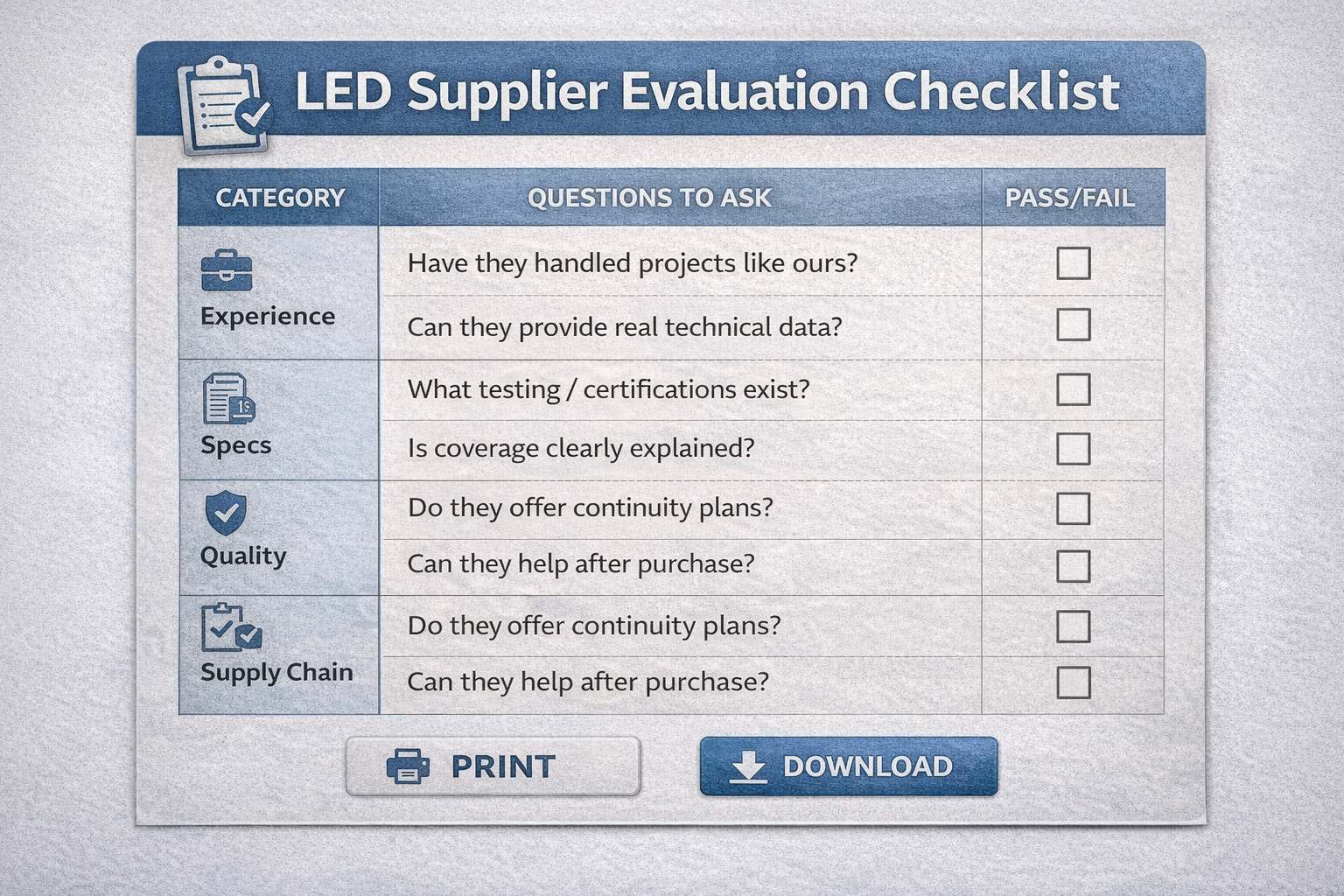
Before you commit, your final checklist should cover technical fit, documentation, quality validation, support model, and supply continuity. That means confirming the product matches your lighting needs, the team understands the application, the data is credible, and the commercial path is clear. It also means testing whether the supplier can answer questions to ask your led sourcing team without relying on vague promises.
If you are comparing 10 led options or narrowing several candidates to one final choice, the goal is not to create more paperwork. It is to remove uncertainty in the selection of LED fixtures. The strongest buying process usually comes from a short list of essential questions asked well, not from an overloaded spreadsheet built around assumptions. A reputable source should make the process clearer, not harder.
How can buyers make the final decision with confidence?
The final step is not finding a perfect vendor for LED fixtures. It is identifying the partner that best matches the job. Buyers should look for technical clarity, realistic communication, credible product support, and a sourcing model that fits the application rather than forcing a one-size-fits-all approach. If a team can answer the hard questions clearly, explain tradeoffs honestly, and support the project after the sale, that is usually a stronger sign than polished marketing.
For technical procurement, the smartest path is often a balanced one. Review the documentation, compare the support model, confirm the details that matter, and choose the team that helps you make an informed decision. That is how buyers reduce risk, protect timelines, and source high-quality lighting solutions with more confidence.
Key takeaways
- Ask about application experience, not just catalog breadth.
- Request real documentation, including a spec sheet and meaningful performance data for the LEDs.
- Clarify quality testing, safety standards, and how the product is validated.
- Understand warranty coverage, support process, and long-term supply continuity.
- Ask how the supplier handles controls, integration, and technical exceptions related to LEDs.
- Compare value through output, support, and lifecycle impact of LED fixtures, not price alone.
- Use a simple supplier checklist to support better sourcing decisions for LED fixtures before you buy.