Tech-led.com


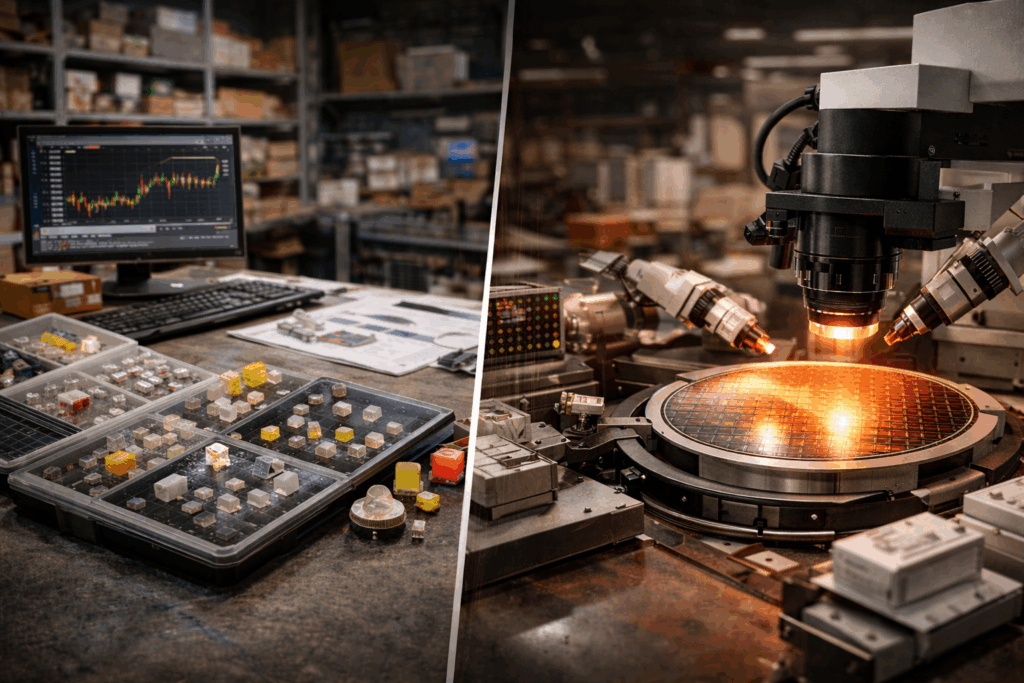
If you are sourcing LEDs for industrial equipment, custom electronics, OEM development, or research systems, choosing between an LED distributor and an LED manufacturer is not just a procurement detail. It can affect technical guidance, component availability, supply flexibility, lead times, and long-term support. These sourcing decisions also sit inside a broader component-supply ecosystem shaped by electronics distribution, qualification, and lifecycle management, as reflected in educational industry resources from ECIA. This article explains how each model works, where their roles overlap, and how buyers can decide which option makes the most sense for a specific project.
For many teams, the right answer is not simply “go direct” or “buy from a catalog.” It is understanding who can best support the application, the volume, the timeline, and the level of engineering detail required. That is especially true when the application depends on a specific wavelength, package style, module design, output target, or continuity plan rather than a generic lamp, bulb, or replacement part.
What is an LED distributor?
An LED distributor is a company that sells LED products and related electronic components, including fluorescent and incandescent options, from one or more manufacturers to customers in the market. In practical terms, a distributor acts as the bridge between the factory and the buyer, ensuring access to both new products and established lines. That role can include inventory access, technical support, supply coordination, and guidance on which component or accessory is the best fit for a given application.
In technical sectors, a distributor often does much more than basic led distribution. A good distributor helps customers compare options, understand performance tradeoffs, identify a specific package or component, and align a project with realistic supply conditions. That can be especially valuable when a buyer needs high power emitters, a custom module, a precise wavelength, or a package format suited to a unique circuit or design constraint.
For OEM and engineering teams, the real value is often flexibility. A distributor may be better positioned than a single manufacturer to help evaluate multiple product lines, discuss alternatives, and support selection across a wider variety of technical needs.
What is an LED manufacturer?
An LED manufacturer designs and produces LED products or related component families through its own manufacturing process. That may include chip-level development, packaging, optics, electronics integration, testing, and quality control. In some cases, the manufacturer also sells directly to the customer. In others, it relies on channel partners, regional sales teams, or authorized distributors.
Manufacturers usually control the core technology, the production roadmap, and decisions around change, warranty, and lifecycle support. They may be the original source for led lighting products, led strip assemblies, high-output emitters, or application-specific packages used in industrial, commercial, or residential systems.
That direct control can be important when a buyer needs a very specific type of component, deep technical detail, or long-term alignment with a single brand. It also matters in applications where LED performance depends on tightly managed semiconductor behavior, packaging, and reliability, topics covered in technical literature such as Optics Express research on high-power LED performance. But it does not automatically mean the manufacturer is the best first point of contact for every customer or every project, particularly when considering the medium of the product.
How are LED distributors and manufacturers different?
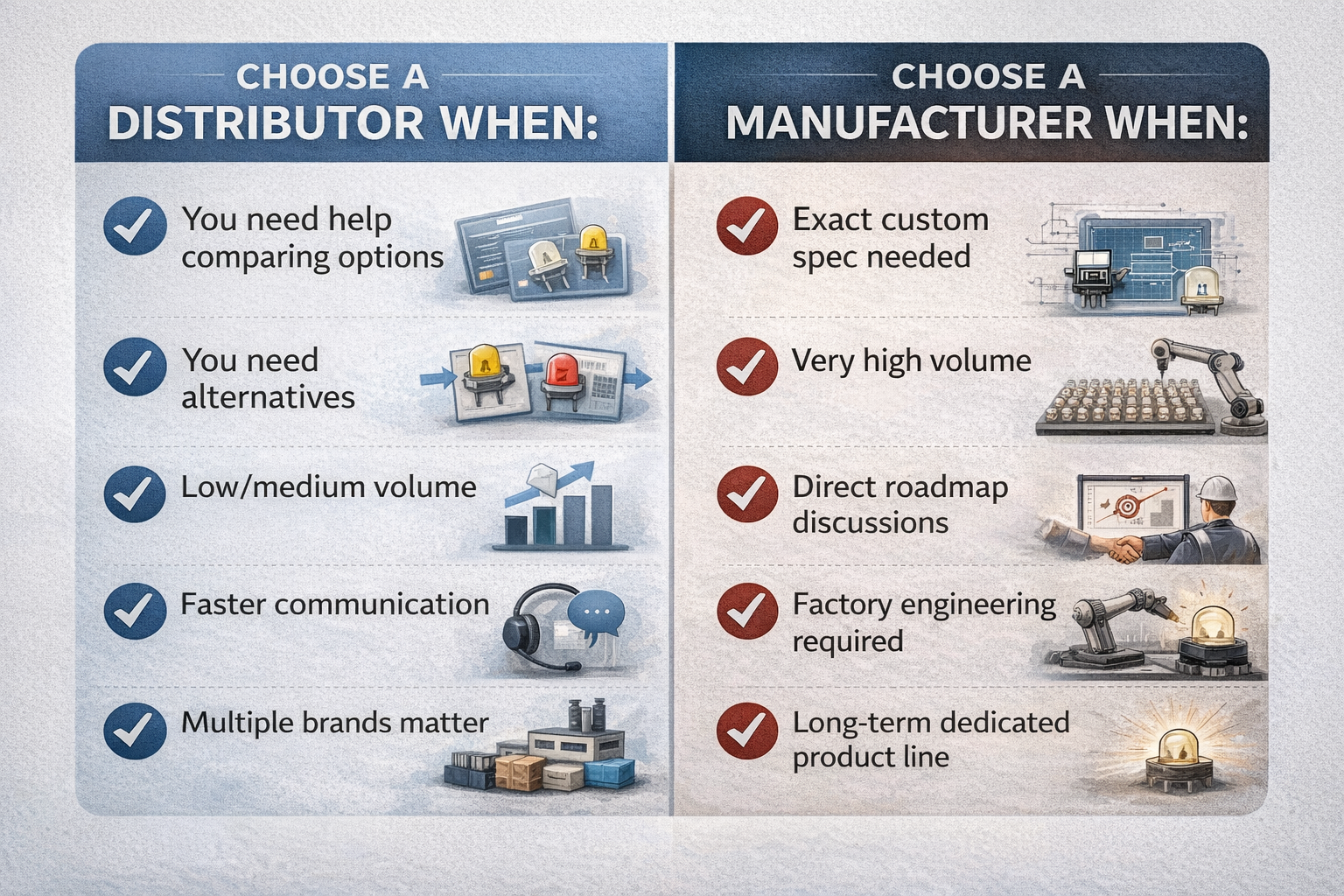
The basic difference is simple: manufacturers make products, while distributors help bring those products to customers. But in real buying situations, the distinction is more nuanced. A manufacturer may lead on core technology and factory-level production, while a distributor may lead on product selection, availability, support, and customer communication.
That difference matters because many buyers are not just choosing a company. They are choosing a supply model comparison that affects speed, flexibility, and risk. If your team is trying to source a component for a new design, evaluate a replacement, or compare options across multiple product families, a distributor may offer a more practical path than working factory-direct.
By contrast, a manufacturer relationship may make more sense when a buyer has stable volume, a narrow selection, and a clear reason to work closely with the original source of the technology. The best route depends on the project, not on which label sounds more authoritative.
When does working with an LED distributor make the most sense?
A distributor usually makes the most sense when a buyer wants support navigating options, not just placing an order. That is common in OEM, research, and industrial sourcing, where teams may be comparing package styles, wavelengths, output levels, power requirements, wiring considerations, or installation constraints before finalizing a selection.
Distributors can also help when flexibility matters. If a team needs a replacement path, wants insight into lead times, or is evaluating more than one supplier or brand, a strong distributor can reduce friction, particularly when sourcing new products. Instead of pushing a single factory line, they can offer perspective on availability, selection, and fit across a broader base of products.
This is often where a company such as Marubeni, through Tech-LED, can be especially useful. For technically demanding buyers, the question is often not just “What can I buy?” but “What should I buy for this exact application, and how stable is that choice over time?”
When does buying closer to the manufacturer make sense?
Buying closer to the manufacturer can make sense when the project has very large volume, highly specific customization needs, or a long-term commercial relationship built around one product family, such as E26 bulbs. In those cases, direct coordination with the factory may support pricing, change management, roadmap discussions, or deeper engineering collaboration.
That can be especially true when the buyer already knows the exact component, has internal technical resources, and does not need as much comparative guidance. A direct relationship may also make sense when custom design decisions affect package geometry, output targets, electronics integration, or manufacturing schedules at scale.
Still, even in these cases, many buyers continue to work through authorized distribution channels because the distributor adds speed, communication support, and sourcing resilience. Direct is not always simpler, and it is not always faster.
Why does the supply model matter for OEM and technical projects?
For OEM and technical buyers, supply structure is part of the product decision, whether it involves fluorescent, incandescent, or LED technologies. The wrong sourcing model can create avoidable delays, weak communication, poor continuity planning, or unnecessary exposure if a component change affects the broader system. That is why distributor vs manufacturer is not just a semantic distinction. It can influence the success of the entire project, especially in programs where component qualification and obsolescence planning are already recognized as supply-chain risk factors in engineering guidance from organizations such as NIST supply chain guidance.
In technical markets, buyers often care about more than price. They care about output consistency, packaging options, maintenance expectations, product roadmap visibility, and what happens if a component becomes unavailable. These concerns matter whether the final application is a sensing platform, a smart industrial device, a machine-vision system, or a specialized LED light assembly built into a larger product, including incandescent options.
The better supply model is usually the one that reduces risk while keeping the team aligned on performance, timeline, and support.
What matters more than the label?
In many cases, what matters most is not whether a company calls itself a distributor, supplier, or manufacturer. What matters is whether it can support the technical and commercial realities of the job. Buyers should ask: Can this team explain the tradeoffs clearly? Can they help match the right component to the application? Can they support continuity if something in the supply chain changes?
A company may use modern marketing language like innovative lighting solutions or sustainable led lighting solutions, but buyers should look past the slogan and evaluate the actual support model. That means understanding how the company handles selection, communication, detail, lead times, application fit, and post-sale support.
For technical sourcing, substance matters more than titles, and understanding the medium of the product is crucial. The partner that helps your team make a better decision is usually more valuable than the one with the flashier positioning, especially if they can provide insights on new products.
How can distributors help with sourcing flexibility and support?
A capable distributor can make sourcing more resilient by giving buyers more than one option within a category, package family, or performance band. That matters when a project depends on a specific color range, a high power emitter, a certain accessory, or a component that must fit an existing base, wall assembly, or compact electronics layout.
Distributors can also help interpret the practical side of the buy. That includes lead time expectations, market conditions, pricing pressure, and whether a given option is a smart fit for a low-volume prototype, a commercial program, or a broader rollout. In that sense, they do not just offer products. They offer context, which can be a low bar for understanding complex decisions.
That support can be especially valuable when a team is comparing a traditional approach with a more modern one, or when a product update, recent news from the supply chain, or a change in availability forces a reevaluation of the original selection.
How do manufacturers influence customization, technology, and scale?
Manufacturers matter most when the discussion reaches technology ownership, process control, and scale, particularly in relation to new products. They define how a component is built, what performance range it can achieve, and how a family evolves over time. That gives them an obvious role in custom design, roadmap planning, and large-scale production conversations. In LED applications, those factors are closely tied to package design, thermal behavior, and optical output stability, all of which are discussed in scientific and engineering literature such as technical literature on thermal management in high-power LEDs.
For buyers that need a very specific output profile, a unique package, or a component integrated into a specialized module, manufacturer engagement can be important. The same is true when a team is evaluating efficiency, reliability expectations, or long-term compatibility with a broader technology strategy, especially in relation to new products.
But the existence of strong factory capability does not eliminate the value of a distributor, especially when navigating the complexities of new products. In many real programs, the most efficient model is a combination: manufacturer strength behind the product, distributor support in front of the customer.
What should buyers ask before choosing a distributor or manufacturer?
Start with the application. What exactly does the project need in terms of wavelength, package style, circuit integration, output, and expected environment, including preferences for E26 or other mediums? Then ask practical questions. Who will help with selection? Who owns the relationship if specifications change? What happens if a product line shifts? How fast can the team respond if a problem appears during development?
Buyers should also ask how support works after the sale. Is there technical guidance available? Is there a clear contact path? Can the team help compare options if the initial selection is not ideal, perhaps offering a tip on better alternatives? These questions matter far more than generic claims about energy efficient lighting or broad product offer language.
Even if the end use involves a led strip, led bulbs, a lamp assembly, or a specialized component rather than a complete table or garage fixture, the same logic applies: the best partner is the one that improves decision quality and lowers sourcing risk.
Why does this distinction matter for long-term supply planning?
Long-term planning is where the difference between manufacturer and distributor often becomes most visible. Over time, buyers may face product updates, selection changes, lead-time pressure, or the need to qualify a new option. A partner that understands the broader supply model can help the team adapt without unnecessary disruption. That is consistent with broader procurement and lifecycle guidance emphasizing resilience, traceability, and continuity in technical supply chains, including materials published by ISO on supply chain security management systems.
For example, if a project began around a specific lumileds line, a distributor with good market visibility may be able to guide the team through continuity questions faster than a buyer working in isolation. The same is true when a fast-moving industry creates pressure around sourcing, or when a remote team needs coordinated support across location, logistics, and application review.
That is why this article is not really about choosing sides. It is about understanding which relationship structure gives your project the best chance of staying technically sound and commercially stable over time.
How does Tech-LED fit into this model?
Tech-LED, backed by Marubeni, fits the model of a technical sourcing partner rather than a generic retail seller. For buyers working in industrial, OEM, and research environments, that matters. The value is not only in access to led products, but in helping connect a specific application to the right supplier path, component selection, and continuity strategy.
That can be more useful than trying to navigate every manufacturer relationship alone, especially when the application involves spectral requirements, custom integration, or engineering-level selection decisions. A team that understands both the technology and the commercial structure can help buyers move with more confidence.
If your project depends on application fit, long-term availability, and informed support, that sourcing model may be the most efficient option.
Key takeaways
- An LED manufacturer makes the component, while an LED distributor helps bring it to market and support buyers.
- The best choice depends on volume, technical complexity, customization needs, and support requirements.
- Distributors are often stronger for flexibility, comparison, and sourcing guidance across a variety of options.
- Manufacturers are especially important when factory-level technology, scale, and customization are central to the project.
- For OEM, research, and industrial teams, the right supply model can reduce risk and improve long-term continuity.
- The most useful partner is not the one with the broadest claim, but the one that can support the actual application in detail.
- For technical sourcing, a knowledgeable partner such as Tech-LED can help bridge the gap between product availability and real application fit.