Tech-led.com


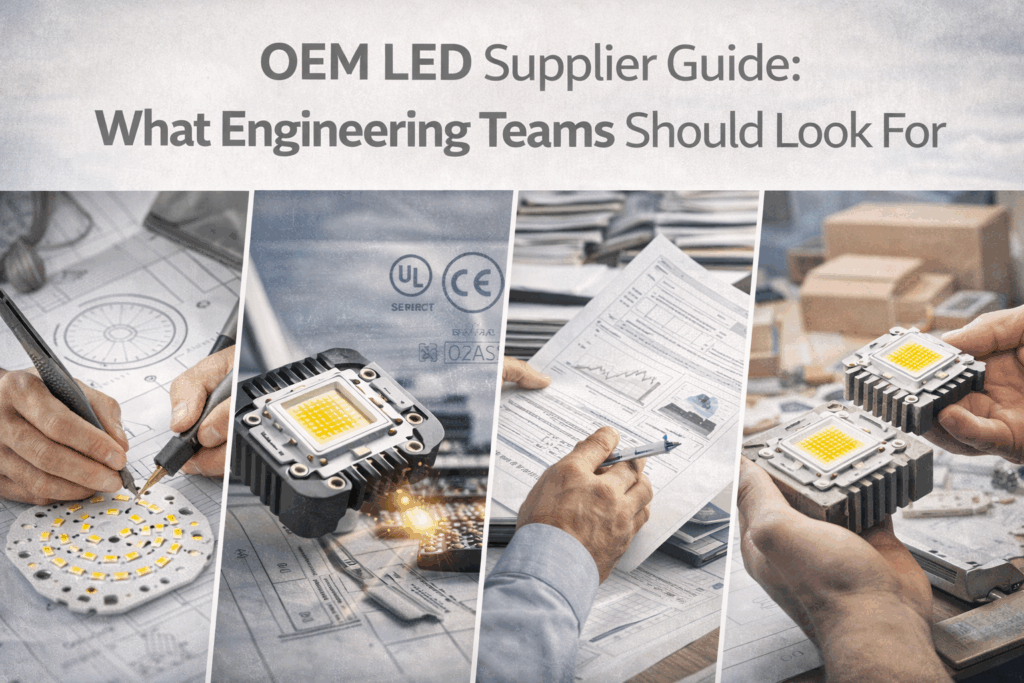
Choosing an OEM LED supplier is not the same as buying standard lighting from a catalog. Engineering teams need a partner that can support design constraints, integration risk, lifecycle planning, compliance, and long-term supply continuity, not just deliver a competitive quote from light manufacturers. This guide explains what OEM buyers should look for when evaluating suppliers for custom integration and technical product development.
That matters because OEM lighting decisions often sit deep inside a larger product, system, or platform. A weak sourcing choice can affect performance, packaging, certification, installation, maintenance, and customer satisfaction long after the initial buy. If your team is evaluating custom led options or broader led lighting solutions, this article will help you compare suppliers through an engineering lens rather than a purely transactional one.
Why is an OEM LED supplier different from a standard lighting supplier?
An oem relationship usually involves more than product selection. The supplier may need to support custom packaging, electrical integration, thermal constraints, optical targets, and product development timelines that go well beyond normal wholesale purchasing. In that sense, the right supplier acts more like a technical partner than a basic order taker.
This is where many oems run into trouble. A company may sell light products or standard led products effectively, but that does not mean it can support a custom requirement tied to system performance, compliance, and change management. Engineering teams should evaluate whether the supplier can work at the depth the application actually demands.
What should engineering teams ask about technical capability?
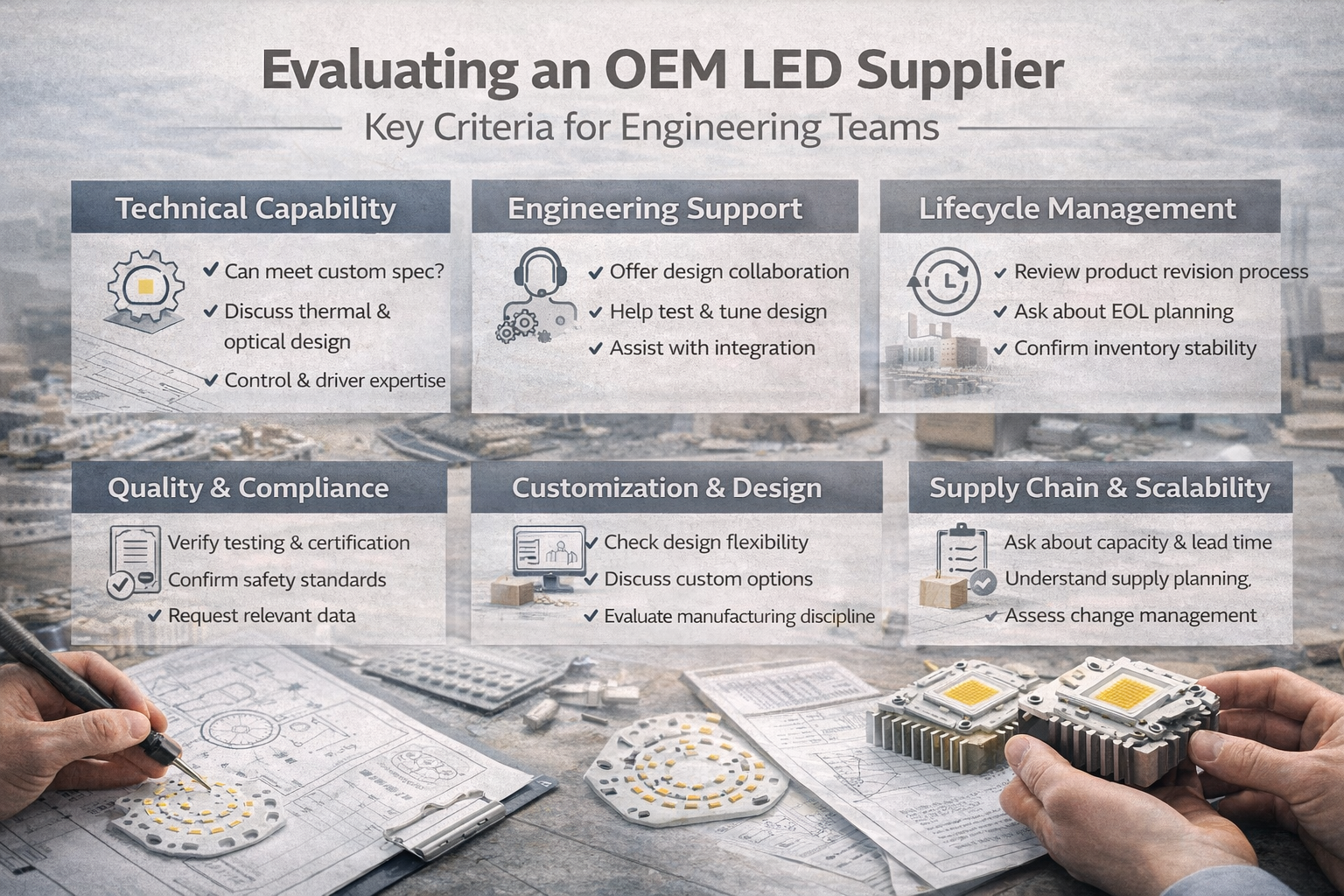
Start with capability. Can the team support your specific application, environment, and system architecture for quality lighting solutions? Can they explain how the fixture, LED components, optics, and LED drivers work together to create energy-efficient lighting? A credible manufacturer should be able to discuss not only catalog options, but also how to tailor a solution around thermal limits, output targets, packaging constraints, and control requirements.
This is where an engineer should push beyond marketing language. Ask whether the supplier can design and manufacture around your specification, whether it has years of experience in similar programs, and whether it can support a niche use case instead of only broad commercial demand. The stronger the answers, the more likely the supplier has real expertise.
How important is engineering support during product development?
Engineering support is often the dividing line between a useful OEM partner and a frustrating one. The right team should help evaluate optical performance, electrical compatibility, mounting constraints, and the tradeoffs that affect the final product. This kind of support becomes especially important when a custom led assembly must fit inside a broader device, housing, or specialty platform.
For OEM programs, early collaboration with designer teams can reduce redesign risk and speed up product development in quality lighting projects. A supplier that can engage before the design is frozen often helps the team avoid downstream problems in installation, output consistency, or component fit in lighting control systems. That is one of the clearest reasons an OEM buyer should value partnership, not just price.
What should buyers look for in lifecycle and change-management support?
Lifecycle support matters because engineering teams do not just need a part for today; they require ongoing support for quality lighting solutions. They need confidence that the solution will remain stable, supportable, and documented over time, especially in the realm of lighting control systems. Ask how the supplier handles product revisions, component substitutions, inventory planning, and end-of-life communication. A reliable source should have a clear process rather than an informal promise.
This is especially important when the led light is embedded into a larger platform with its own support obligations. If a driver changes, a component moves, or a certification status shifts, the OEM team needs advance visibility. The right partner will help manage those changes instead of leaving the customer to discover them too late.
How should engineering teams evaluate quality and certification?
Quality should be reviewed through both documentation and process. Ask what testing supports the product, what certification applies, and how the team validates performance across builds. Depending on the program, buyers may need photometric data, electrical test records, thermal characterization, waterproof validation, or evidence that the product is ul listed where relevant.
Regulatory review also matters in OEM work because compliance often affects the larger system, not just the lighting subassembly, particularly in energy-efficient lighting designs. A strong manufacturer should be able to discuss regulatory expectations, electromagnetic compatibility, material handling, and how certification or label requirements are maintained over time.
What role do customization and design flexibility play?
Customization is often the reason an OEM team seeks a specialized supplier in the first place. That may involve a unique beam pattern, control logic, mechanical packaging, custom led modules, or integration into light fixtures, power supplies, and broader lighting components. The question is not only whether a supplier says yes to customization, but also if they can offer innovative lighting control options. It is whether that customization can be delivered repeatably and at the right quality level.
A serious OEM supplier should be able to tailor a solution without losing discipline around manufacturing, documentation, and repeatability. That includes discussing output, optical behavior, mounting, thermal conditions, and whether the requested variation belongs inside a stable platform or requires a more bespoke path.
When do private label and brand considerations matter?
Some OEM relationships are built around function alone, while others involve private label or branded integration. If your company needs a branded assembly, a customer-facing label, or a specific packaging approach, ask how the supplier handles brand presentation, traceability, and documentation. Private label work can be useful, but it adds another layer of control that should be discussed early.
This is also where product portfolio discipline matters, particularly for light manufacturers focusing on quality lighting. A broad portfolio can be helpful, but only if the supplier understands which options genuinely support your brand and product direction. For an OEM program, too many loosely related choices can be less useful than a focused path that supports the actual design intent.
How should teams think about cost, pricing, and commercial fit?
Pricing always matters, but OEM sourcing should compare value rather than quote alone. Buyers should ask how pricing changes with volume, customization, test requirements, and inventory commitments. It also helps to understand what support is included, whether samples are representative, and how commercial terms align with long-term production expectations.
For example, a supplier may not be the cheapest on day one, but may still deliver a better long-term solution through stronger engineering support, fewer redesigns, and more stable manufacturing. That is especially relevant when the program depends on high-quality led performance or complex integration. In these cases, the cheapest path can become the most expensive one.
What kinds of products and markets signal useful experience?
Experience matters most when it is relevant. Ask what kinds of led lighting products the company has supported, which markets it tends to specialize in, and whether its background matches your use case. A team with experience across commercial, residential, outdoor led, pool, architectural, or industrial applications may still not be the right fit if your project depends on a very specific technical niche.
That said, a wide range of experience can still be a strength when it reflects real adaptability in the context of lighting control technologies. A supplier familiar with fixture manufacturers, designer-led programs, dmx controls, and custom assemblies may bring broader problem-solving ability than one that only sells standard catalog items. The goal is to find relevant experience, not just volume of claims.
How important are supply-chain support and inventory planning?
OEM work depends on repeatability, and repeatability depends partly on supply discipline within the energy-efficient lighting sector. Ask how the supplier manages inventory, forecasts, component sourcing, and backup plans. If the program grows, can the team scale? If the schedule shifts, can the supplier adjust without creating instability? These are practical questions, but they often reveal the real strength of the relationship.
A good partner should be able to discuss manufacturing cadence, component planning, and how it supports continuity over time. Whether the program involves one custom fixture family or a broader set of led lighting solutions that deliver across multiple SKUs, supply planning is part of the engineering conversation, not separate from it.
What does a strong OEM supplier relationship look like in practice?
A strong oem relationship usually combines technical depth, disciplined communication, and commercial realism. The supplier understands the requirement, supports the design process, documents changes, and works like a partner invested in long-term success. That is different from a purely transactional source, even if both can quote similar components.
In practice, that means the supplier can deliver answers about quality lighting solutions, not just parts. It can support led lighting at the system level, align around your application, and help the team move from concept to production with fewer surprises. In the lighting industry, that kind of partner is often more valuable than a longer list of generic options.
How can engineering teams choose the right OEM LED partner?
The best final choice comes from matching technical needs to proven support. Buyers should review engineering capability, lifecycle support, certification strength, manufacturing discipline, and commercial fit together. If the supplier can explain the technical tradeoffs clearly, support the program responsibly, and adapt to the realities of the build, that is a strong sign of fit.
For OEM teams, the goal is not simply to buy a component. It is to build a dependable path around lighting solutions that deliver performance, continuity, and confidence. That is how engineering teams choose a supplier relationship that supports both the product and the business behind it.
Key takeaways
- An OEM LED supplier should function as a technical partner, not just a source of parts.
- Engineering support, customization discipline, and lifecycle planning matter as much as pricing, especially when it comes to energy-efficient lighting solutions.
- Quality review should include testing, certification, documentation, and repeatability.
- Customization only matters if the supplier can deliver it reliably at production quality.
- Relevant experience in energy-efficient lighting is more important than broad claims about markets or product range.
- Supply planning and change management should be part of the OEM evaluation from the start.
- The best OEM partner is the one that supports performance, integration, and long-term confidence together.