Short-wave infrared inspection at 1450 nm is especially useful when moisture-sensitive contrast matters. In food processing, agricultural handling, and industrial quality control, a 1450 nm LED can help reveal differences that are difficult to see under visible light or more conventional IR illumination. That makes this wavelength particularly relevant for teams working with SWIR sensor…
Tech-Led Blog
SWIR LEDs
-
-
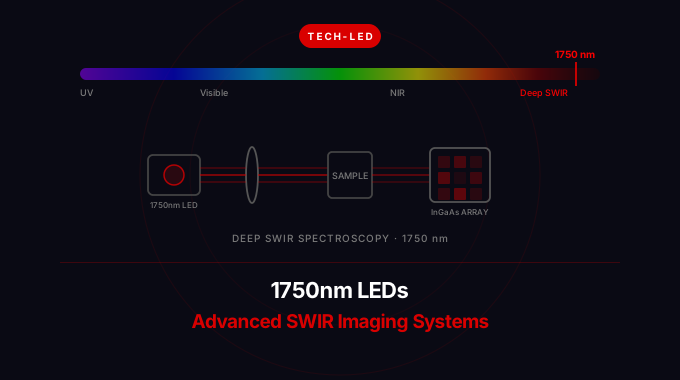
1750 nm LEDs sit at the deeper end of the SWIR spectrum, where industrial imaging, sensing, and advanced inspection systems begin to move beyond general-purpose infrared illumination and into more specialized optical work. At this wavelength, system designers are often thinking less about ordinary viewing and more about detector compatibility, spectroscopy-adjacent workflows, and the kind…
-
A 1650 nm LED sits in an especially useful part of the SWIR range for industrial sorting, material detection, and optical inspection. In recycling lines, manufacturing environments, and automated classification systems, this wavelength can help reveal differences that are difficult to detect under visible light alone. That makes it highly relevant when the goal is…
-
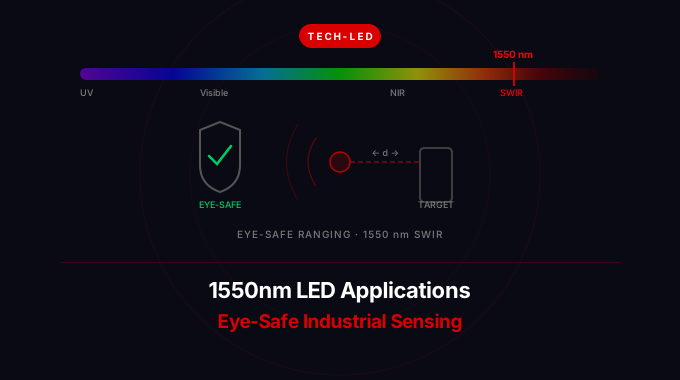
A 1550 nm LED sits in a strategically important part of the SWIR spectrum for sensing, imaging, and industrial inspection. This wavelength is often associated with eye-safer system design, detector compatibility, and specialized optical tasks where standard visible or shorter-wave IR illumination is not the best fit. For engineers evaluating industrial sensing systems, 1550 nm…
-
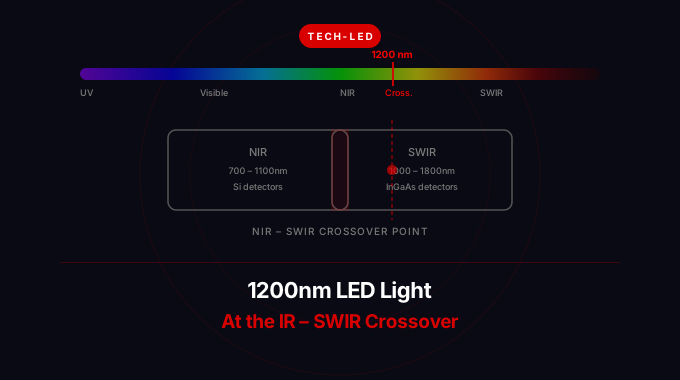
Short-wave infrared (SWIR) LEDs around 1200 nm represent a pivotal transition point between traditional infrared and the deeper SWIR region. This article explores what makes the 1200 nm wavelength special, how photodiode detectors behave at this crossover, and why engineers often choose LED emitters over lasers at 1200 nm. We delve into the semiconductor technology behind 1200nm LEDs,…
-
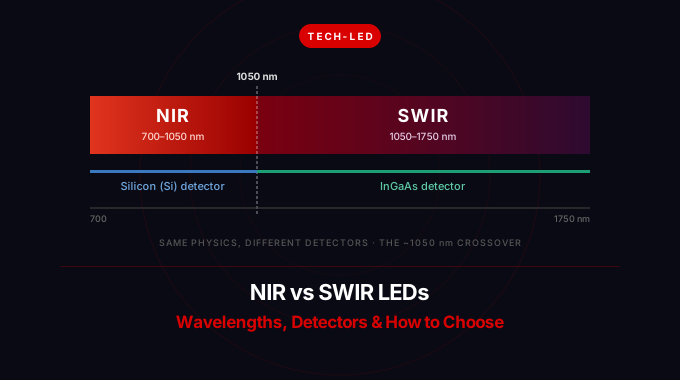
Summary: This article explores 1050 nm LED technology and why it matters for short-range SWIR (short-wave infrared) systems. We cover how 1050nm sits at the edge of the near-infrared spectrum, bridging into SWIR, and explain its unique advantages for low-noise IR illumination. You’ll learn how these high-power infrared LEDs differ from common 850nm or 940nm…
-
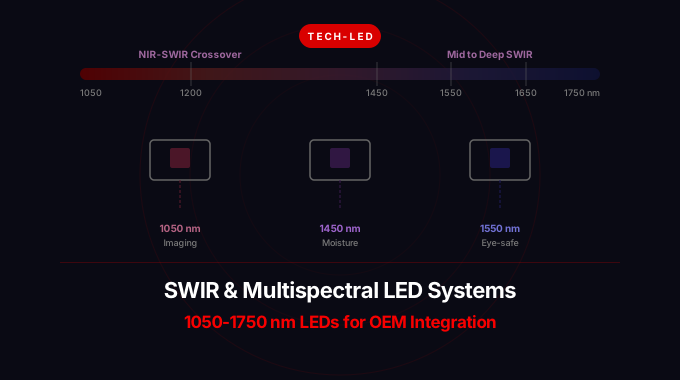
Industrial SWIR (short wave infrared) LED lighting operates in the 1050-1750 nm band, beyond the silicon detector cutoff at roughly 1100 nm. SWIR LEDs enable imaging, sensing, and machine vision applications that silicon-based cameras and photodetectors cannot see: through-fog and through-silicon-wafers imaging at 1050-1200 nm (including silicon wafer inspection), moisture detection at 1450 nm, eye-safe…
-
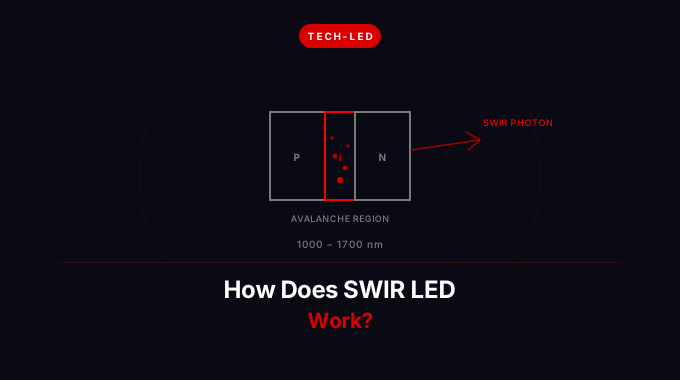
What is SWIR, and how can you benefit from high-performance SWIR LEDs? How does SWIR LED work? This article will cover the basics of SWIR. We will analyze the diverse range of new opportunities that SWIR LEDs can offer. Read on to learn about the most common uses of SWIR LEDs. The article will analyze…
-
SWIR LED technology is a type of light-emitting diode that operates in the shortwave infrared (SWIR) spectrum. The full form of SWIR is "Shortwave Infrared." It is a type of LED that operates in the wavelength range of 900 nm to 1700 nm, which is different from traditional LED technology that operates in the visible…
-
Industrial SWIR (short wave infrared) LED lighting operates in the 1050-1750 nm band, beyond the silicon detector cutoff at roughly 1100 nm. SWIR LEDs enable imaging, sensing, and machine vision applications that silicon-based cameras and photodetectors cannot see: through-fog and through-silicon-wafers imaging at 1050-1200 nm (including silicon wafer inspection), moisture detection at 1450 nm, eye-safe…