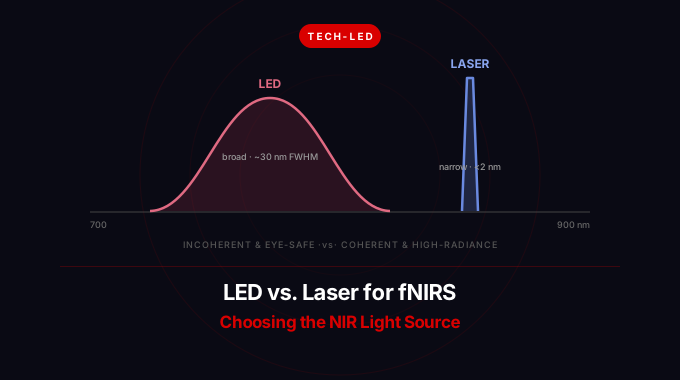
Functional near-infrared spectroscopy (fNIRS) measures brain activity by shining near-infrared light through the scalp and skull and detecting how much is absorbed by oxygenated and deoxygenated hemoglobin in the cortex. Building an fNIRS device requires at least two NIR wavelengths that straddle the ~810 nm hemoglobin isosbestic point — most commonly a pairing around 760…
Tech-Led Blog
Medical & Biometric Sensing
-
-
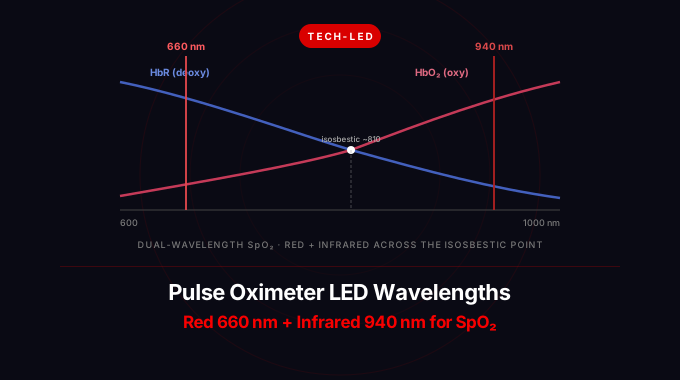
A pulse oximeter measures blood oxygen saturation (SpO₂) by shining two wavelengths of light through perfused tissue and comparing how much each is absorbed. The standard pairing is a red LED at ~660 nm and a near-infrared LED at ~940 nm, chosen because oxygenated hemoglobin (HbO₂) and deoxygenated hemoglobin (HbR) absorb red and infrared light…
-
Functional near-infrared spectroscopy (fNIRS) measures brain activity by shining near-infrared light through the scalp and skull and detecting how much is absorbed by oxygenated and deoxygenated hemoglobin in the cortex. Building an fNIRS device requires at least two NIR wavelengths that straddle the ~810 nm hemoglobin isosbestic point — most commonly a pairing around 760…
-
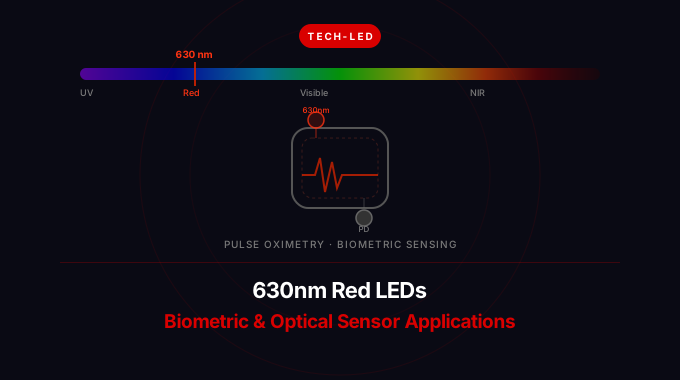
630 nm red LEDs have emerged as critical components in modern biometric sensors, offering a precise light source for measuring physiological signals beneath the skin. This particular wavelength is ideal for penetrating human tissue to illuminate blood vessels while still being selectively absorbed by key biomolecules like hemoglobin. The result is a balanced interplay of…
-
Near-infrared (NIR) light therapy, a subset of photobiomodulation (PBM), represents a cutting-edge, non-invasive therapeutic modality that harnesses specific wavelengths of light to elicit profound biological effects at the cellular level. Unlike visible light, NIR penetrates deeper into tissues, making it a powerful tool for addressing a wide array of health concerns, from muscle recovery to…
-
Infrared (IR) LED light therapy, a rapidly evolving modality within the field of photobiomodulation (PBM), harnesses specific wavelengths of light to elicit therapeutic effects at the cellular level. This non-invasive approach has garnered significant attention for its potential in regenerative medicine, pain management, and dermatological applications. For optoelectronic engineers and integrators, a thorough understanding of…
-
Near-infrared LEDs in medical devices are quietly transforming patient care, from high-tech hospital equipment to everyday health monitors. These invisible wavelengths of light give medical designers new ways to sense and heal the human body without invasive procedures. As detailed in our Near-Infrared (NIR) LED Guide, a near-IR LED (also called an infrared diode) emits…
-
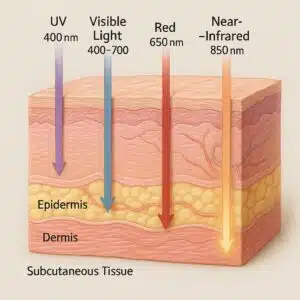
LEDs appear across medical devices in three broad roles, each defined by wavelength. In phototherapy, red (~630–660 nm) and near-infrared (~850 nm) light drive photobiomodulation for pain relief, circulation, and skin treatment. In biomedical sensing, red and infrared LEDs (660 + 940 nm) measure blood oxygen in pulse oximeters, and paired NIR wavelengths (~760 +…
-
In recent years, technological advancements have paved the way for groundbreaking innovations in the field of medical devices. One such revolution is the integration of Extreme Tiny Chip-Scale Package (CSP) LED technology into medical devices. This tiny yet powerful lighting solution is reshaping healthcare, offering numerous benefits in terms of efficiency, precision, and patient care….