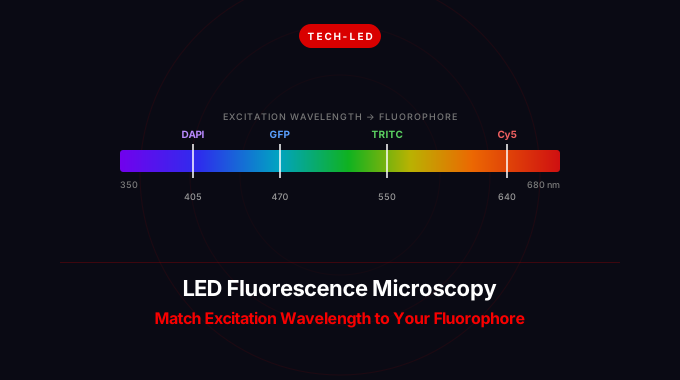
The light source in a fluorescence microscope has one job: deliver a band of excitation light that overlaps the absorption peak of the fluorophore you are imaging, then get out of the way so the longer-wavelength emission can be detected. Choosing the LED is therefore a wavelength-matching problem. DAPI excites near 358 nm (a 365…
Tech-Led Blog
UV LEDs
-
-
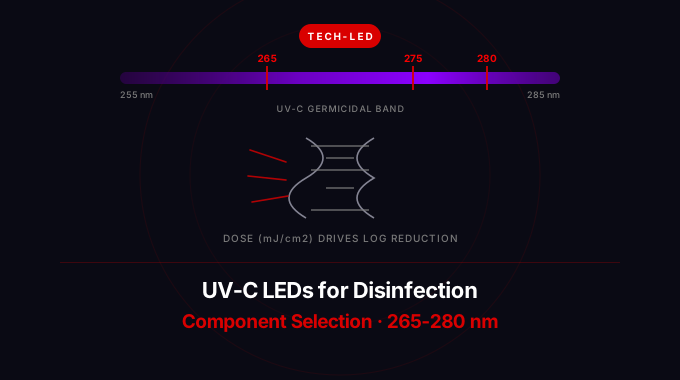
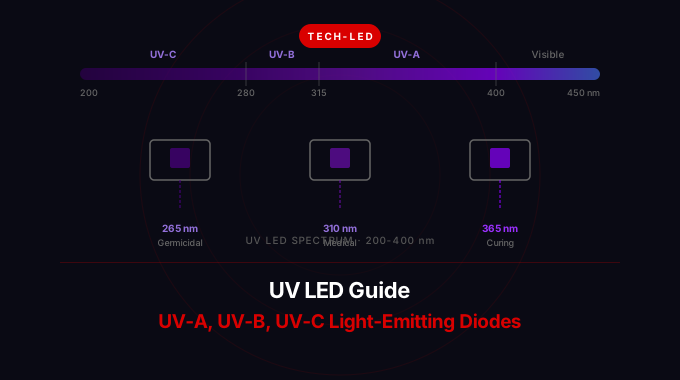
Industrial UV LEDs span 200-420 nm across three sub-bands: UV-C (200-280 nm) for germicidal and water-disinfection applications including surface disinfection and water purification, UV-B (280-315 nm) for narrow medical and specialty curing uses, and UV-A (315-400 nm) for industrial curing of inks, coatings, and adhesives, plus fluorescence excitation and optical inspection. Selection depends on three…
-
Industrial UV LEDs span 200-420 nm across three sub-bands: UV-C (200-280 nm) for germicidal and water-disinfection applications including surface disinfection and water purification, UV-B (280-315 nm) for narrow medical and specialty curing uses, and UV-A (315-400 nm) for industrial curing of inks, coatings, and adhesives, plus fluorescence excitation and optical inspection. Selection depends on three…
-
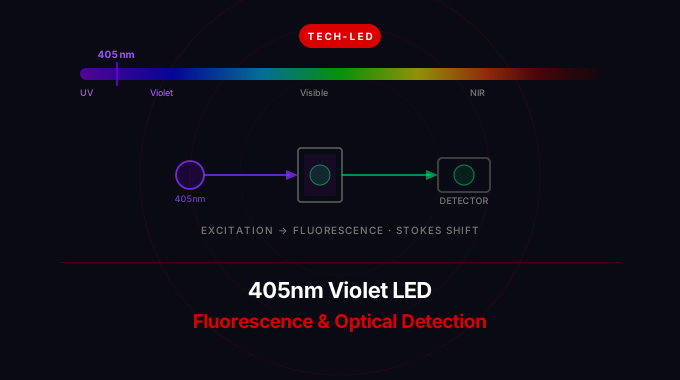
405 nm LED technology sits at the border of visible violet and ultraviolet light (UV-A), effectively functioning as an ultraviolet LED in the UV-A range, making it a unique member of the UV & Near-UV LEDs (235–420 nm) category. This near-ultraviolet wavelength offers distinct advantages for industrial optical systems. From fluorescence microscopy and machine vision…
-
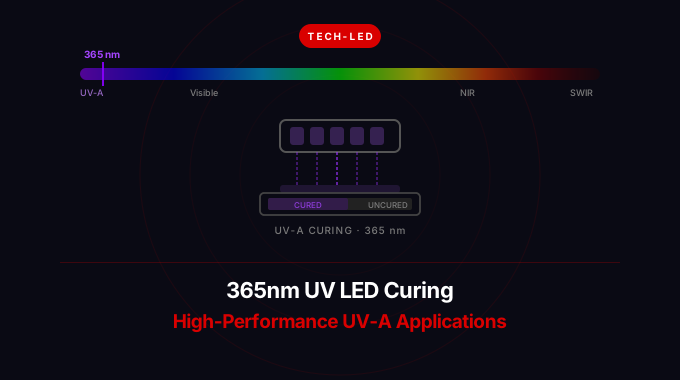
In the UV curing world, 365 nm is widely recognized as the standard UV-A LED curing wavelength. This specific LED wavelength lies in the long-wave ultraviolet range, delivering “invisible” UV light that triggers photochemical reactions without stray visible glare. From curing inks and coatings to bonding adhesives and hardening 3D printing resins, 365nm UV LEDs…