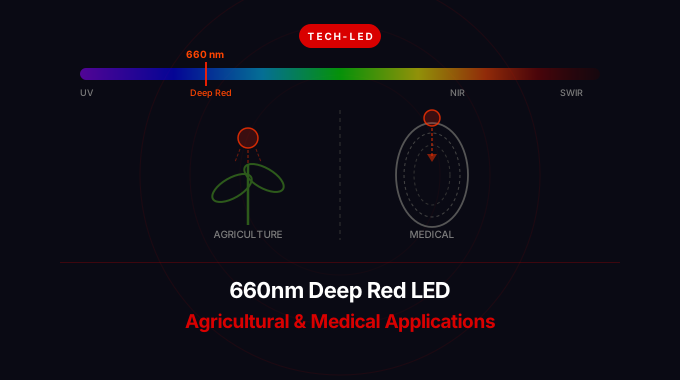
Deep red 660 nm LED emitters have become essential components in both advanced agricultural lighting and biomedical systems. At a wavelength of 660 nanometers – the heart of the red light spectrum – these LEDs align with peak chlorophyll absorption to maximize photosynthetic light for plants, while also offering an optimal balance of optical penetration and…
Tech-Led Blog
Visible LEDs
-
-
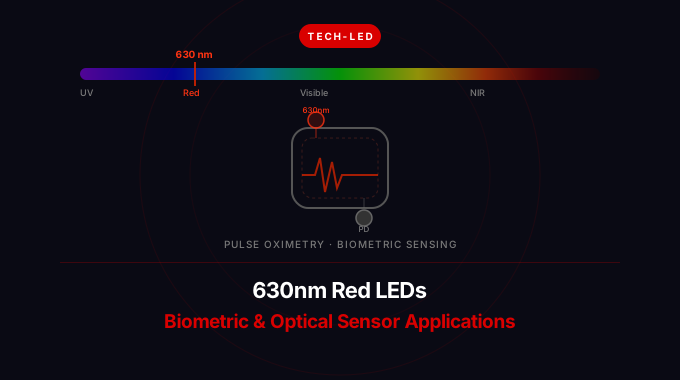
630 nm red LEDs have emerged as critical components in modern biometric sensors, offering a precise light source for measuring physiological signals beneath the skin. This particular wavelength is ideal for penetrating human tissue to illuminate blood vessels while still being selectively absorbed by key biomolecules like hemoglobin. The result is a balanced interplay of…
-
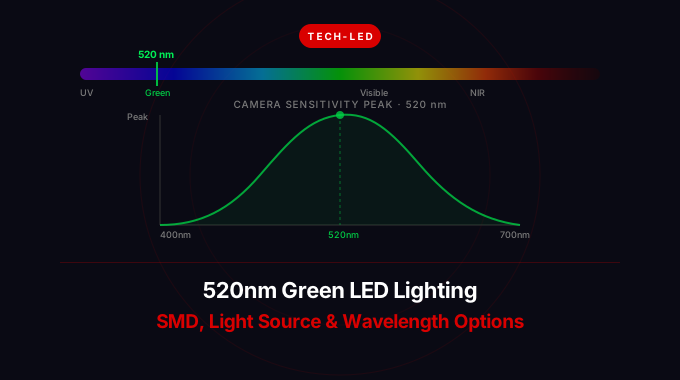
520 nm green LEDs are crucial in industrial vision systems and agricultural sensors. In machine vision, this green wavelength aligns with peak camera sensitivity and helps produce balanced white-light illumination for accurate imaging. In agricultural applications, green light is strongly reflected by plant foliage, providing a means for canopy imaging and photosynthesis detection proxies like…
-
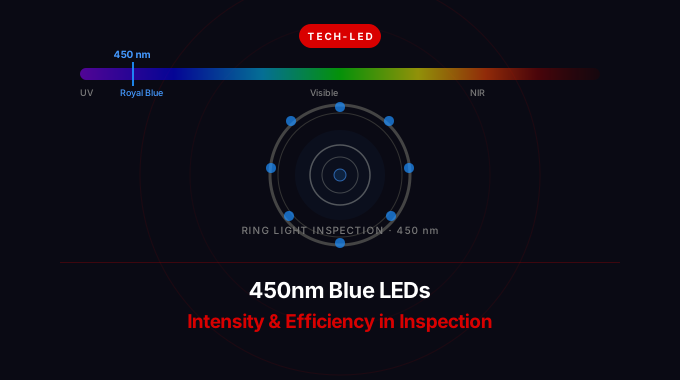
In industrial inspection and machine vision systems, high-power 450nm LED sources have become a key element for providing intense blue illumination. This “royal blue” wavelength sits at the cusp of the visible spectrum between violet and green, offering high-energy photons for enhanced contrast without veering into ultraviolet UV light. These high power LEDs provide intense…